The Way Your Dog Relates to You May Show Up in Its Body
Does my dog’s bond with me affect its stress levels? According to a new observational study published in Scientific Reports, the answer may be yes. Researchers found that the way a dog attaches to its caregiver — whether anxious or secure — was linked to measurable differences in the dog’s stress physiology. In other words, the quality of the human-dog relationship may actually show up in the dog’s body.
This is early-stage research, and the study was observational, meaning it identified patterns and links rather than pinpointing one thing as the direct trigger for another. But the findings are meaningful for any dog owner who has ever wondered whether the relationship they build with their dog truly matters.
What “Attachment Style” Actually Means in Dogs
You may have heard the term “attachment style” used in human psychology — it describes how a person tends to relate to others when seeking comfort or safety. Dogs have something similar. When a dog experiences something stressful or unfamiliar, it often looks to its caregiver for reassurance, much like a young child looks to a parent.
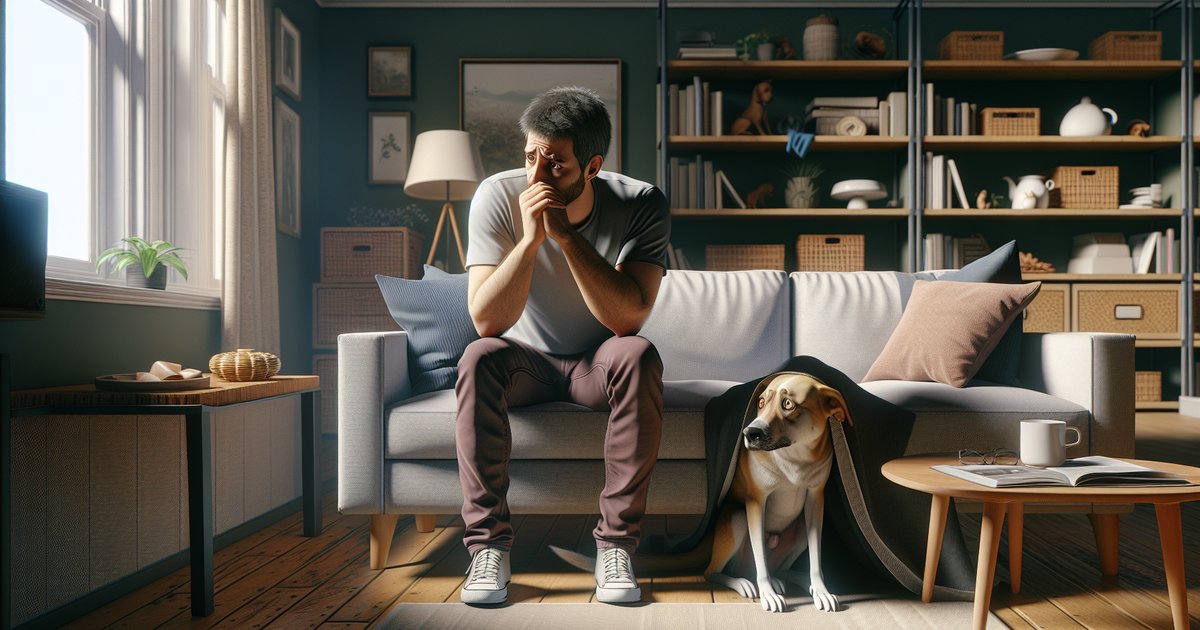
Researchers call this the secure base effect — a dog that feels safe and secure with its owner is more likely to explore confidently and recover quickly from stress. A dog with a more anxious attachment style, on the other hand, may be more unsettled, harder to calm, or more persistent in seeking closeness even when nothing scary is happening.
This study looked at whether those different attachment patterns were tied to actual differences in the dog’s physiology — the measurable internal signals the body sends when it’s under stress.
What the Researchers Measured
The research team observed dog-caregiver pairs and collected physiological measurements — biological markers that can reflect how stressed or calm a dog is at a given moment, and over time. Think of these like internal gauges the body runs continuously in the background.
- Acute stress markers reflect what’s happening right now — similar to how your heart rate jumps when something startles you.
- Chronic stress markers reflect what’s been happening over a longer period — a sign of ongoing, low-level tension.
By pairing behavioral observations with these physiological readings, the researchers could look for patterns: did dogs with one type of attachment tend to have different readings than dogs with another type?
What the Study Found
Anxious Attachment Was Linked to Higher Stress Readings
The study found that dogs showing anxious attachment patterns toward their caregivers were associated with higher stress markers. This held for both the short-term (acute) and longer-term (chronic) measurements.
This association doesn’t mean that an anxious attachment style is the only reason a dog might show elevated stress readings — many other triggers could be involved. But it does suggest that the emotional tone of the dog-owner relationship may be reflected in how the dog’s body responds to the world around it.
Seeking Contact Was Linked to Lower Stress Markers
On the other side of the coin, the study found that dogs who actively sought contact with their caregiver — a behavior associated with a more secure attachment — tended to show lower stress markers. Reaching toward your dog for comfort isn’t just a feel-good moment; it may genuinely help keep your dog’s internal stress system running at a calmer level.
Why This Matters for You and Your Dog
This research adds to a growing body of evidence that the human-dog bond isn’t just emotionally meaningful — it may have real effects on a dog’s physical well-being. The relationship you build with your dog every day, through consistent routines, calm handling, and attentive care, could be doing more than you realize.
It also suggests that dogs who seem anxious or clingy aren’t just being dramatic. Those behaviors may reflect a real internal experience — one that shows up in measurable ways in the body.
What You Can Do to Support a Secure Bond
You don’t need to be a dog behaviorist to support a healthy, secure relationship with your dog. Small, consistent habits make a real difference:
- Be a predictable presence. Dogs thrive on routine. Consistent feeding times, walks, and sleep schedules help a dog feel safe and know what to expect from you.
- Let your dog choose contact. Dogs that are allowed to approach and retreat on their own terms tend to feel more secure than those that are forced into closeness. Let your dog come to you when it wants comfort.
- Respond calmly to anxious behavior. If your dog seems unsettled, a quiet, calm presence is more reassuring than excited attention or dismissal. You’re helping your dog learn that you’re a safe base.
- Spend quality one-on-one time together. Regular, low-pressure time with your dog — a quiet walk, a calm grooming session, or simply sitting together — may help build the kind of secure bond this research links to calmer stress markers.
- Avoid unpredictable punishment. Inconsistent discipline can undermine the sense of safety that supports secure attachment.
When to Talk to Your Vet or a Behaviorist
If your dog shows signs of significant anxiety — such as destructive behavior when left alone, constant panting, trembling, or inability to settle — it’s worth raising with your veterinarian. Stress that’s ongoing and severe can have real health consequences, and there are effective tools, from behavioral training to medication, that can help.
A certified veterinary behaviorist or a reward-based trainer can also help you build a stronger, calmer relationship with a dog that’s struggling. The goal isn’t a perfect dog — it’s a dog that feels secure in its world, with you as its anchor.
Keeping the Science in Perspective
This study was observational, which is an important caveat. That means the researchers identified links and associations between attachment patterns and stress markers — they didn’t set up a controlled experiment where one group of dogs received a specific intervention and another group didn’t. Observational research is valuable for spotting patterns, but it can’t tell us exactly which factor is driving which outcome.
The sample was also limited to the dog-caregiver pairs in this study, so it’s too early to say how universal these patterns are across different breeds, ages, or living situations. Larger follow-up studies will help clarify the picture.
What the study does do is add meaningful evidence to a trend researchers have been tracking for years: the quality of the bond between dogs and their people appears to matter, not just emotionally, but in measurable biological ways.
What Dog Owners Should Take From This Study
A dog’s relationship with its owner may shape more than just behavior — it may be linked to how the dog’s body handles stress. This observational study found that anxious attachment patterns were associated with higher stress markers, while contact-seeking was associated with lower ones. For dog owners, the takeaway is encouraging: the small daily moments of calm connection you share with your dog may actually matter in ways you can’t see.
This article summarizes peer-reviewed research for educational purposes. Always consult with your veterinarian for personalized advice about your pet’s health and behavior.