Cat Arthritis May Involve More Than Just the Joints
If your cat has been diagnosed with arthritis — technically called osteoarthritis — you probably think of it as a joint problem. And it is. But a study published in Scientific Reports suggests that arthritis in cats may also involve changes in how the nerves work. Researchers compared 18 cats — 6 young, healthy cats and 12 older cats with osteoarthritis — and found that the arthritic cats showed differences in how their nerves carried electrical signals. Some of those nerve changes were also associated with more pain sensitivity and greater difficulty moving around.
This is early research, but it adds an important layer to what we know about cat arthritis. Managing your cat’s pain may be more complex than targeting joints alone.
Why Nerves Matter in Arthritis
Arthritis is usually described as a breakdown of cartilage — the smooth, cushiony tissue that sits between bones in a joint. When cartilage wears down, bones move with more friction, and that friction hurts. It is similar to what happens in people and dogs with arthritis.
What this study looked at is whether arthritis might also affect the nerves — the body’s communication system. Nerves carry two kinds of messages: ones that tell muscles to move (motor nerves) and ones that carry the sensation of pain or touch back to the brain (sensory nerves). If those pathways are disrupted, it could help explain why some cats with arthritis seem to hurt in ways that are hard to manage, even when the joint itself is being treated.
How the Researchers Did the Study
The team used a prospective, randomized, and blinded design — a careful setup meant to reduce bias. “Blinded” means that the people doing the measurements did not know which cats had arthritis and which did not, so their results could not be unconsciously influenced by that knowledge.
The two groups were:
- 6 young, healthy cats — a reference group with no known joint disease
- 12 older cats with osteoarthritis — the cats being studied
The researchers measured nerve conduction in both groups. Think of this like testing a telephone line: how quickly and cleanly is the signal getting through? Faster, cleaner signals suggest healthier nerve pathways. Slower or weaker signals suggest something may be changing in how the nerves function.
Both motor nerve conduction (signals for movement) and sensory nerve conduction (signals for touch and pain) were measured. Researchers also assessed each cat’s functional ability — how well it could move around — and pain sensitivity.
What the Study Found
The older cats with osteoarthritis had lower motor conduction velocity than the healthy younger cats. In plain language, their movement-controlling nerves were carrying signals more slowly. This does not mean arthritis directly broke those nerves, but it suggests the two are connected.
The study also found that some of the nerve-conduction measurements were associated with how much functional impairment the cats showed and how sensitive they were to pain. Researchers used the term somatosensory sensitization to describe this — which simply means the nervous system becomes more tuned in to pain signals over time, amplifying discomfort. Cats showing more nerve changes tended to also have more trouble moving and greater signs of pain sensitivity.
These are associations, not confirmed explanations. But the pattern is meaningful.
What This Could Mean for Your Cat
If your cat has arthritis, this research suggests the nervous system may be part of the picture, not just the joints. Some cats respond well to standard joint-focused treatments. Others continue to seem uncomfortable. The nerve changes described in this study could be one reason why.
The practical takeaway: if your cat’s arthritis pain does not seem well-controlled, or if your cat appears very sensitive to touch, it may be worth discussing the broader issue with your vet. Pain in cats with arthritis can have more than one source.
Signs that an older cat may be dealing with arthritis-related discomfort include:
- Moving around the house more slowly or reluctantly
- Hesitating to jump up or down from furniture
- Spending much more time resting in one spot
- Reacting sharply when touched in certain areas
- Seeming less interested in grooming hard-to-reach spots like the lower back
These signs can be easy to miss, because cats are very good at hiding discomfort. If you notice a pattern, a vet visit is a good next step.
Talking to Your Vet About Pain Control
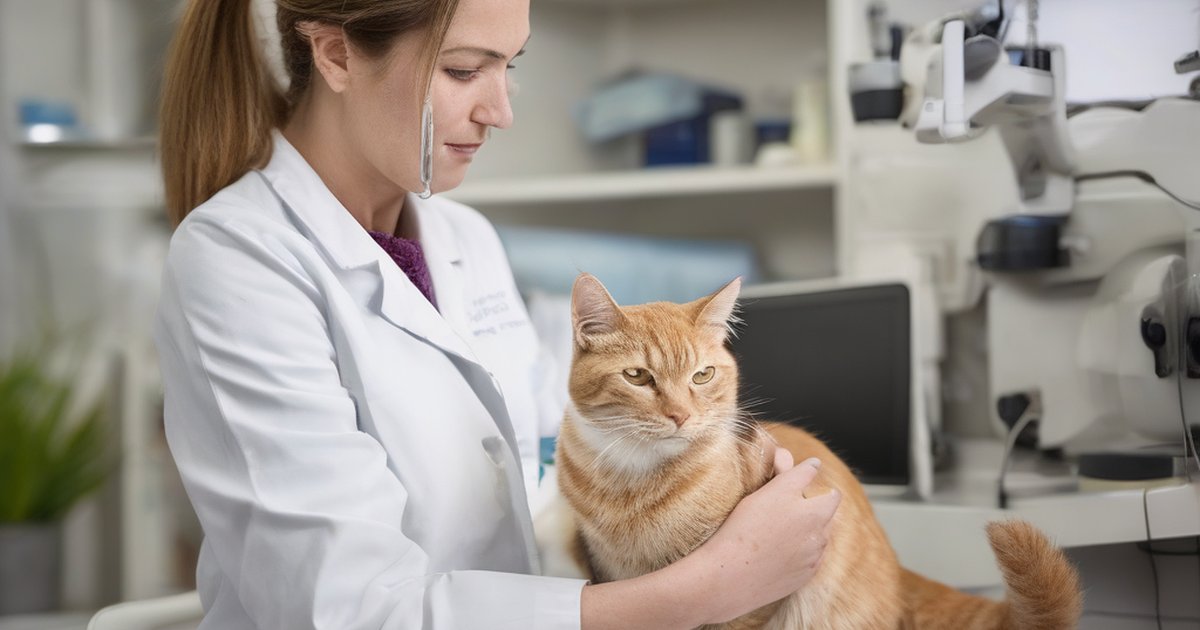
This study is not a reason to change your cat’s treatment on your own. It is a reason to have a more detailed conversation with your veterinarian about whether the pain is fully managed. If your cat has arthritis, your vet can evaluate mobility, pain response, and whether the current approach is working.
Pain management options for cats have expanded significantly in recent years. There are treatments available that target different pathways — not just the joints. Getting an accurate picture of where the discomfort is coming from helps your vet choose the right approach.
Limitations of This Study
The study had important constraints. With only 18 cats total, the findings are suggestive rather than definitive. The researchers noted that the small sample size limits how broadly these results can be applied. A study with more cats, across different breeds and ages, will be needed to confirm these patterns.
The design also compared two groups — healthy cats and cats with arthritis — but that kind of comparison cannot establish that arthritis led to the nerve changes. Age may be a factor too, since the arthritic group was also older. Future research will need to untangle how much of the nerve difference is linked to the joint disease itself versus age-related changes.
Slower Nerve Signals, More Pain: What Cat Owners Should Take Away
Arthritis in cats may involve more than joint damage. A comparison of 18 cats found that older cats with osteoarthritis showed slower motor nerve signal speeds, and that some nerve-conduction measures were associated with pain sensitivity and reduced mobility. This suggests cat arthritis is multifaceted — and that the nervous system may play a role alongside the joints.
For cat owners, the clearest takeaway is this: if your older cat seems uncomfortable, moves less freely, or is very sensitive to touch, take it seriously. Those signs may point to pain that is not fully controlled. Your vet can help figure out what is going on and whether adjustments to treatment might help.
This article summarizes peer-reviewed research for educational purposes. Always consult with your veterinarian for personalized advice about your pet’s health and behavior.