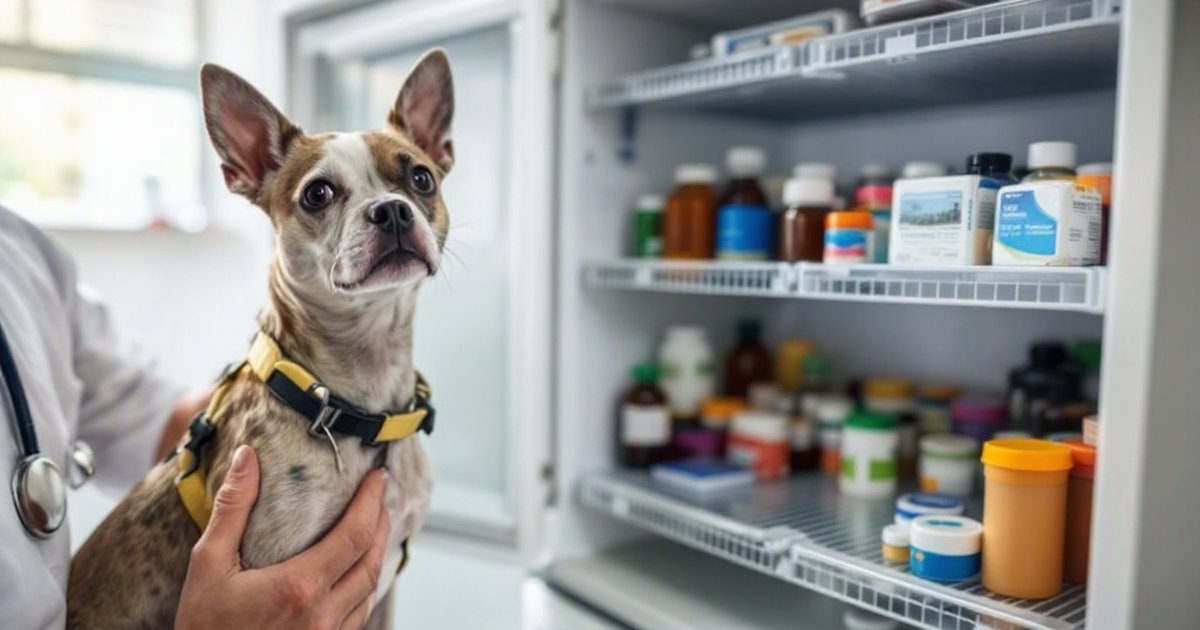
Is Your Pet’s Medication Still Working?
Pet medication storage temperature is something most pet owners never think about — but a new study suggests it deserves more attention. Research published in BMC Veterinary Research surveyed 23 veterinary clinics and found that nearly 61% of them had no way to monitor the temperature where they stored drugs and vaccines. On top of that, the average temperatures in storage cabinets were higher than the recommended safe limits. The survey did not test medication potency directly, but it documented storage conditions that can be a concern for quality control.
This matters to you as a pet owner because your pet may receive medications or vaccines from clinics where storage is not consistently monitored. The good news is that knowing about this problem is the first step — and there are simple questions you can ask your vet clinic to help protect your pet.
Why Medication Storage Temperature Matters More Than You Think
Think about a stick of butter left on the counter on a hot summer day. It does not disappear — it just becomes something very different from what it was in the refrigerator. Many medications are temperature-sensitive, which is why storage guidance exists. This study did not measure chemical degradation directly, but elevated storage temperatures are generally treated as a potential risk factor for medication quality.
For vaccines specifically, this is a well-known problem called “cold chain failure.” Cold chain simply means keeping a vaccine at the right cool temperature from the moment it is made, through shipping, and all the way to the moment it is given to your pet. Break any link in that chain — say, by storing vaccines in a cabinet that gets too hot during the day — and effectiveness can be compromised. This study did not measure vaccine outcomes in pets, but it identified conditions that could increase that risk.
How the Study Was Done
Researchers visited 23 veterinary clinics in Nigeria’s Federal Capital Territory and looked closely at how drugs and vaccines were stored. They used a two-week temperature monitoring period — meaning they measured actual temperatures inside clinic storage areas over 14 days, not just asked staff what the temperature usually was.
They also surveyed clinic staff about their practices and checked whether clinics had thermometers or other devices in place to track storage temperatures.
Here is a quick summary of the study setup:
- Location: 23 veterinary clinics in Nigeria’s Federal Capital Territory
- Method: Cross-sectional survey combined with two weeks of actual temperature recording
- Focus: Presence of temperature-monitoring equipment and actual drug storage temperatures
What the Researchers Found
Most Clinics Had No Way to Check the Temperature
The headline finding is stark: 60.9% of the clinics surveyed had no temperature-monitoring devices in their drug storage areas. That is more than six out of every ten clinics. Without a thermometer or a digital monitor, clinic staff have no reliable way to know if medications are being kept at the right temperature. They may assume conditions are fine when they are not.
Storage Temperatures Were Too High
The researchers did not just ask clinics what they thought the temperature was — they measured it directly. The results showed that average storage temperatures in medicine cabinets exceeded the recommended upper limits for pharmaceutical storage. Most common medications are labeled for storage below 25°C (77°F), and many vaccines have stricter requirements. The study did not test products from those cabinets, but these readings indicate a potential risk that storage conditions could reduce effectiveness.
Together, these two findings paint a worrying picture: clinics often did not know they had a problem because they had no tools to detect it.
What This Means for You and Your Pet
Your Pet’s Medications Depend on More Than a Prescription
When your vet writes a prescription or gives your pet an injection, you naturally trust that the medicine will work. This study is a reminder that medication quality depends not just on what is prescribed, but on how it is stored. While this survey did not measure pet outcomes or lab-confirm potency loss, it highlights why clinics need reliable temperature monitoring to reduce avoidable risk.
This does not mean you should panic or distrust your vet. But it does mean that storage conditions are a legitimate and important part of good veterinary care — and something worth asking about.
Simple Questions You Can Ask Your Vet Clinic
You do not need to be a scientist to advocate for your pet’s care. Here are a few straightforward questions you can ask when you visit a new clinic or when your pet is due for vaccines:
- “How do you store vaccines and medications here?”
- “Do you use a thermometer or digital monitor in your storage areas?”
- “Are your refrigerators and storage cabinets checked daily for temperature?”
A good clinic will welcome these questions and have clear answers. Clinics with proper monitoring systems will be happy to explain them. If a clinic seems uncertain or dismissive, that is useful information too.
When to Talk to Your Veterinarian
If you have questions about how your clinic handles medications or vaccines, this study supports asking directly about storage and temperature monitoring. This is especially reasonable in very warm climates or facilities with limited climate control.
You should also talk to your vet if:
- Your pet’s medication does not seem to be helping as expected
- You are unsure whether the clinic uses proper temperature monitoring
- You are considering switching to a new clinic and want to ask about their storage practices
Honest Limitations of This Study
This study was conducted in a specific location — veterinary clinics in Nigeria’s Federal Capital Territory — and involved just 23 clinics. That is a small number, and conditions in that region (hot climate, varying levels of infrastructure) may not represent what you would find at clinics in cooler climates or in places with more consistent electricity and air conditioning. The data also came partly from staff surveys, which means the results depend on what people reported, not just what was directly measured.
That said, the two-week temperature monitoring adds real-world evidence that storage conditions were genuinely problematic — this was not just a survey of opinions. And the underlying issue of temperature monitoring gaps in veterinary settings is not unique to any one country. Studies from other parts of the world have found similar patterns.
The Bottom Line
More than 60% of the veterinary clinics in this study had no way to track the temperature where they stored medications and vaccines. And where temperatures were measured, they often exceeded the recommended limits. The study did not directly test medication potency or pet health outcomes, but it identified a meaningful storage-practice gap that can raise quality concerns.
The fix is not complicated — thermometers and temperature loggers are inexpensive and widely available. But they only help if clinics use them consistently. As a pet owner, the most practical takeaway is this: do not hesitate to ask your vet clinic how they store medications and vaccines. It is a reasonable question, and the answer can tell you a lot about the quality of care your pet receives.
This article summarizes peer-reviewed research for educational purposes. Always consult with your veterinarian for personalized advice about your pet’s health and behavior.