Could the Way a Broken Bone Is Fixed Actually Change How It Heals?
Fracture healing in dogs and cats may be influenced not just by the surgery itself, but by how stiff the hardware used to hold the bone together actually is. A new narrative review published in Frontiers in Veterinary Science explored whether deliberately adjusting implant stiffness — allowing more movement in the early stages of recovery and then adding rigidity later — could lead to better healing outcomes for pets.
This is an early, emerging concept. The review summarizes existing research rather than reporting results from a clinical trial, so it does not prove the approach works in everyday practice yet. But the preclinical evidence it gathered offers a compelling picture of how bone healing responds to the mechanical environment around it.
How Bone Healing Actually Works
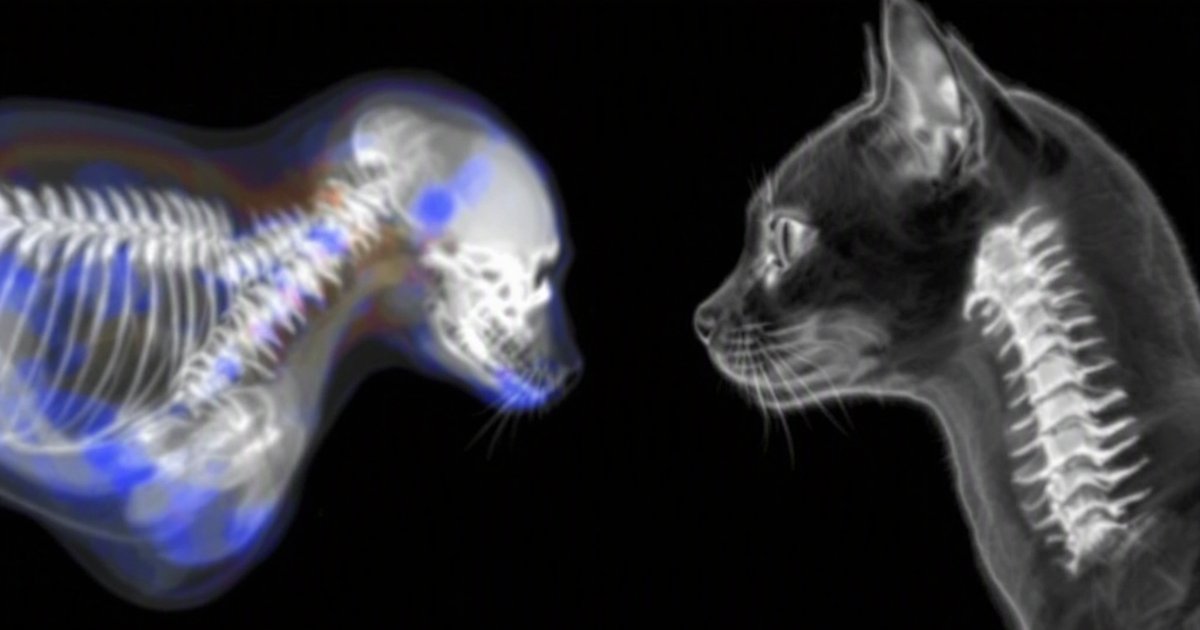
When a bone breaks, the body goes to work repairing it. One of the most important parts of this process is forming something called a callus — a bridge of new tissue that gradually hardens into bone. Think of it like a scaffolding structure that grows across the break and slowly solidifies.
What makes bone healing different from other types of healing is that it responds to physical forces. A certain amount of movement — not too much, but some — can actually signal the body to build more bone tissue. Too much rigidity too early may suppress that signal. Too much movement throughout can prevent the callus from hardening properly.
That is the key insight behind this review: the amount of stiffness provided by a fracture implant may not need to stay the same throughout the whole healing process.
What the Review Found
Controlled Early Movement May Help Build the Repair Scaffold
The review drew on preclinical studies — research done in laboratory and animal model settings rather than direct clinical trials in companion animals — suggesting that allowing a small, controlled amount of movement right after fracture repair may encourage the body to build a stronger initial callus.
In simple terms: a little flex in the healing bone early on may give the body a signal to invest more resources in building that repair bridge. Too-rigid hardware in the early phase may inadvertently reduce that signal.
Stiffer Support Later May Help the Repair Scaffold Harden
Once the early scaffolding has formed, the review suggests that switching to more rigid fixation — giving the bone less flex — may help the callus convert into hard, mature bone more efficiently.
The idea is a two-phase approach: softer hold early to encourage callus growth, firmer hold later to let that callus mature. Researchers use the phrase “temporal stiffness modulation” — changing stiffness over time — to describe this concept.
Why This Is Still an Emerging Idea
This review is a narrative review, meaning the authors gathered and interpreted existing literature rather than conducting a new experiment. There was no group of dogs or cats enrolled in a trial, and no direct comparison of real-world outcomes between treatment approaches.
The preclinical findings referenced in the review are promising, but translating laboratory and animal-model results into routine veterinary practice takes time and careful validation. The authors themselves noted that further clinical research is needed before this becomes a standard treatment strategy.
In other words: this is a concept worth watching, not a recommendation to seek a specific implant type for your pet right now.
What This Could Mean for Pets Down the Road
If future clinical research validates this approach, it could eventually influence the design of fracture-repair devices used in dogs and cats. Vets might use implants engineered to flex in a controlled way early in recovery and then provide more rigid support as healing progresses — or they might adjust external fixation devices according to a timed protocol.
For now, the most practical takeaway is that bone healing is more dynamic than it might seem. The mechanical environment around a healing fracture — including how much movement is allowed — plays a real role in the outcome.
Signs to Watch for During Fracture Recovery
Fracture repair is already a complex, highly individualized process in veterinary medicine. Your vet’s decisions about hardware type, how much weight-bearing to allow, and when to recheck the bone are all grounded in this understanding of healing mechanics.
If your pet is recovering from a fracture, some signs that healing may not be progressing as expected include:
- Persistent lameness or refusal to bear weight past the expected recovery window
- Swelling, heat, or discharge around the surgical site
- Pain when the area is gently touched
- A new or worsening limp after a period of improvement
- Visible change in how the limb sits or moves
Always contact your veterinarian if you notice any of these signs. Fracture healing timelines vary depending on the pet’s age, the type and location of the break, and the repair method used.
The Bottom Line
A narrative review in Frontiers in Veterinary Science suggests that strategically adjusting implant stiffness during fracture repair — allowing some movement early and then increasing rigidity as healing progresses — may improve outcomes for dogs and cats. The concept is supported by preclinical evidence, but has not yet been validated in clinical trials with companion animals. It represents an emerging research direction rather than a current treatment recommendation.
For pet owners, the key takeaway is that bone healing is an active, responsive process, and veterinary orthopedics continues to evolve. Future implant designs may be built around this principle — but for now, following your vet’s post-surgery guidance closely remains the most important thing you can do for your pet’s recovery.
This article summarizes peer-reviewed research for educational purposes. Always consult with your veterinarian for personalized advice about your pet’s health and behavior.