Movement and Rehabilitation in Dogs With Arthritis
A five-week supervised rehabilitation program was evaluated in 21 client-owned dogs diagnosed with secondary osteoarthritis, in a prospective clinical study published in Frontiers in Veterinary Science. Researchers measured passive joint range of motion (PROM) using a goniometer and limb circumference using a tape measure as a proxy for muscle condition before and after the program.
The study adds to ongoing interest in structured rehabilitation as a component of multimodal arthritis care. Osteoarthritis is the most common form of joint disease in dogs, and understanding how supervised exercise may affect joint mobility and muscle condition is a practical question for owners and veterinarians alike. Importantly, the authors note that the study design does not allow causal conclusions — it is an observational pre/post series without a control group.
Why Muscle Condition Matters in Arthritic Dogs
Most people know arthritis causes joint pain and stiffness. Less well known is that arthritis also tends to lead to muscle wasting — the gradual weakening of the muscles that support the joints.
Think of muscles like a support brace around a bad knee. The stronger the brace, the better protected the joint. When pain causes a dog to avoid using a leg normally, the surrounding muscles can weaken over time, which may in turn affect how comfortably the dog can move.
Veterinary rehabilitation — similar in concept to physical therapy in people — aims to keep dogs moving safely through supervised exercises designed to maintain joint mobility and muscular support as the underlying joint disease is managed.
How the Study Was Done
Researchers enrolled 21 client-owned dogs with secondary osteoarthritis in a structured therapeutic exercise program. Sessions were supervised and adjusted by a rehabilitation clinician, lasted 60–90 minutes each, and were conducted three times per week over five weeks.
The primary outcomes were:
- Passive joint range of motion (PROM) — measured by a clinician using a goniometer, a standard instrument for assessing how far a joint moves through its normal range
- Limb circumference — measured by tape measure as a practical proxy for changes in muscle condition around the affected limb
When owner-reported LOAD questionnaire scores were available, they were collected, but owner reports were not a primary study outcome.
This was an observational prospective pre/post series: dogs were assessed before the program and after it, without a control group for comparison. The authors used descriptive statistics to summarize the results.
What the Researchers Found
Variable PROM Responses and Observed Limb-Circumference Changes
PROM responses — the goniometer measurements of passive joint mobility — varied across individual dogs in the cohort. This variability is notable: not all dogs responded in the same direction or to the same degree, which is consistent with the heterogeneous nature of secondary osteoarthritis and the range of concurrent treatments the dogs may have been receiving.
Limb-circumference changes were also observed over the course of the program. Because limb circumference is used here as a proxy for muscle condition rather than a direct imaging measure of muscle volume, the clinical significance of those changes should be interpreted cautiously.
The authors explicitly state that no causal relationship can be established from this study. The observational, uncontrolled design — combined with the heterogeneous cohort, concurrent treatments, descriptive-only statistical analysis, and potential measurement variability in goniometry and tape measurement — means the data cannot show that the exercise program caused the changes observed.
These findings should be understood as descriptive observations from a small clinical cohort, not as evidence that the program improves outcomes or preserves muscle strength in a cause-and-effect sense.
How to Put This Into Practice for Your Dog
Ask Your Vet About a Rehab Referral
If your dog has been diagnosed with arthritis — or if you have noticed signs like stiffness after rest, reluctance to jump or climb stairs, or a change in gait — talk to your veterinarian about whether a structured exercise program could be part of the plan.
Some general practices offer basic rehabilitation guidance. Others will refer you to a veterinary rehabilitation specialist (a vet with advanced training in therapeutic exercise, similar to a sports medicine doctor for people). Either way, the key is that any exercise plan for an arthritic dog should be tailored to that specific dog — not a generic routine.
What Structured Exercise Might Look Like
A therapeutic exercise program for an arthritic dog typically involves a combination of:
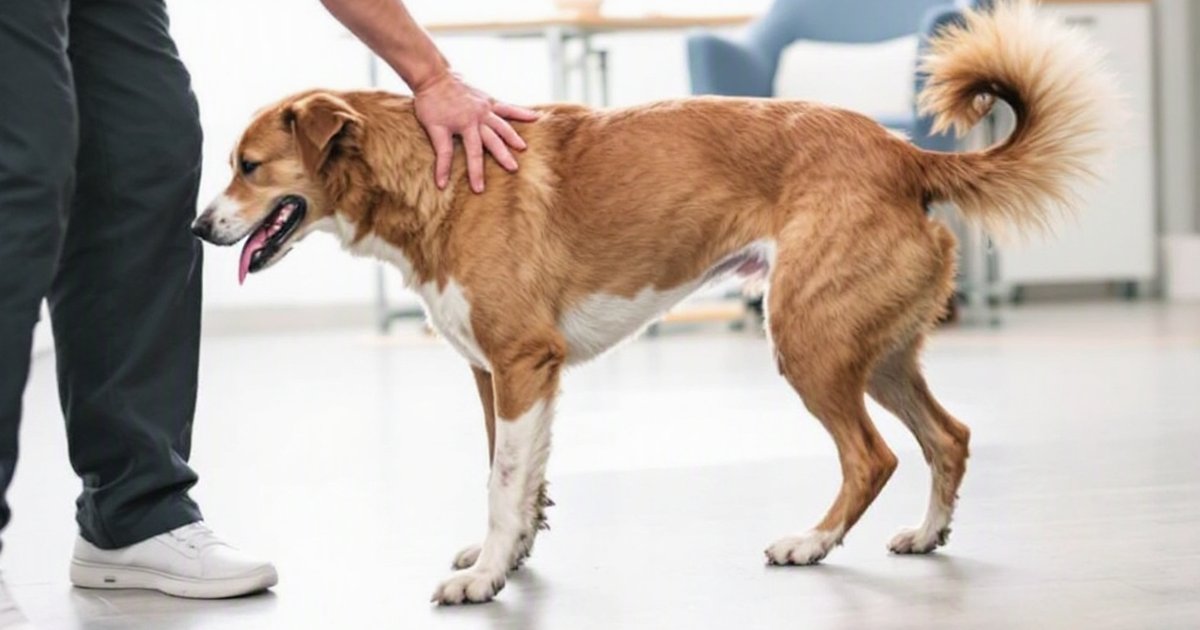
- Controlled leash walks on flat, even surfaces — carefully paced so the dog works muscles without overdoing it
- Range-of-motion exercises that gently keep joints moving through their normal bend and flex
- Balance and strengthening activities, which might include standing on a balance disc, stepping over low poles, or practicing weight shifting
- Rest and recovery periods built into the schedule
The specific exercises and their intensity should be guided by a vet or rehabilitation professional. Overdoing exercise on arthritic joints can worsen inflammation, so “more is better” does not apply here.
Signs of Arthritis Worth Mentioning to Your Vet
Dogs are remarkably good at hiding pain. Subtle signs that your dog may be experiencing joint discomfort include:
- Slowing down on walks or lagging behind
- Stiffness in the morning or after napping
- Difficulty getting up from a lying position
- Limping, even if only occasional
- Less interest in play or activity they used to enjoy
These signs are worth raising with your veterinarian even if they seem mild — early intervention is generally more effective than waiting.
An Honest Look at the Study’s Limits
This was an uncontrolled observational pre/post series of 21 dogs, and the authors themselves state that no causal relationship can be established. Several factors limit how broadly the findings can be applied: the cohort was heterogeneous (different dogs, different affected joints, different severities of secondary osteoarthritis); concurrent treatments were not fully standardized; the statistical analysis was descriptive only; and the measurement tools — goniometry and tape measurement — each carry inherent variability.
The study is best understood as a clinical observation from a small, supervised program, not as a controlled trial demonstrating that structured exercise preserves muscle or improves joint mobility in arthritic dogs. More research — ideally randomized, controlled studies with larger and more uniform cohorts — would be needed to draw firmer conclusions about which dogs benefit most and how much.
The Bottom Line
A prospective clinical study published in Frontiers in Veterinary Science (Török et al.) described a five-week supervised rehabilitation program for 21 dogs with secondary osteoarthritis, measuring passive joint range of motion by goniometry and limb circumference by tape. PROM responses varied across dogs, and limb-circumference changes were observed — but the uncontrolled, observational design means no causal conclusions can be drawn about whether the program caused those changes.
If your dog has been diagnosed with arthritis, it is reasonable to ask your veterinarian whether a supervised rehabilitation program makes sense as part of a broader care plan. Any exercise approach should be tailored to the individual dog and supervised by a veterinary professional — self-directed exercise on arthritic joints can worsen inflammation if not managed carefully. Talk to your vet about what options may be appropriate for your dog’s specific situation.
This article summarizes peer-reviewed research for educational purposes. Always consult with your veterinarian for personalized advice about your pet’s health and behavior.