Dog Thermography Results Depend on More Than Just Temperature
Dog thermography — a type of scan that uses an infrared camera to create a heat map of your dog’s body — gives different readings depending on your dog’s coat length and the area of the body being scanned. That’s the key finding from a new study published in Frontiers in Veterinary Science, which looked at 33 healthy adult dogs. Researchers found that short-haired dogs showed higher surface temperature readings in several body regions compared to dogs with longer coats. This matters because vets are increasingly using these heat scans to screen for pain and injury — and coat length can change what the camera picks up.
If your vet has ever mentioned thermography, or if you’ve heard about it in the context of canine rehabilitation or sports medicine, this research helps explain why the results aren’t always as straightforward as they might seem.
What Is Dog Thermography — and Why Does It Matter?
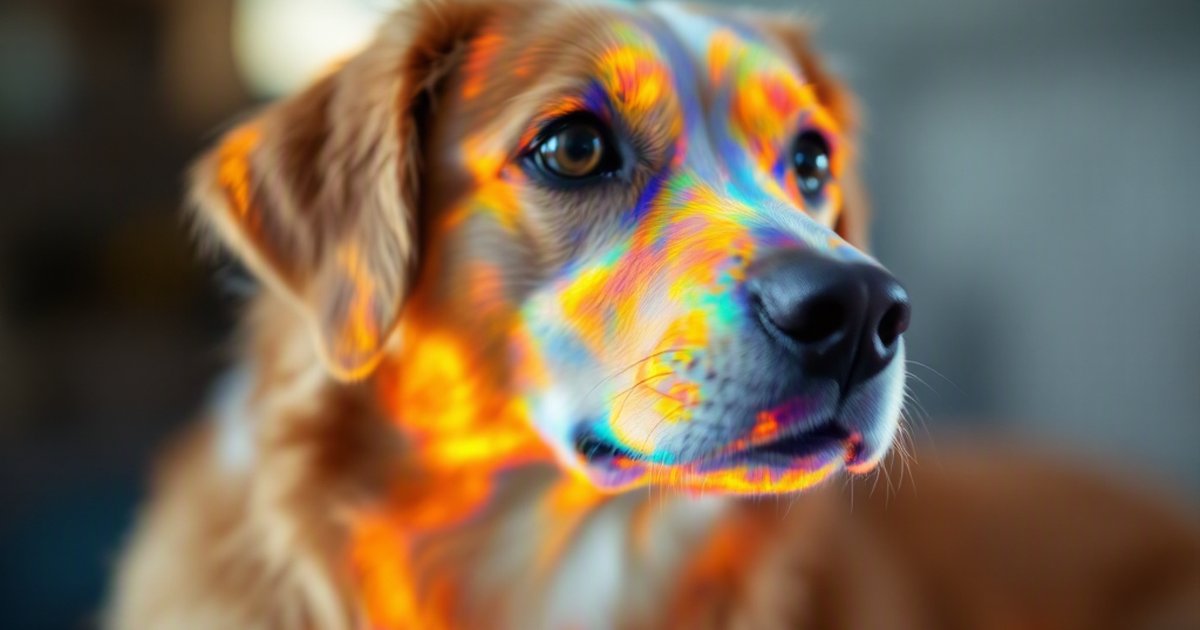
Think of infrared thermography as a special camera that “sees” heat instead of light. When you take a photo of a dog with this camera, you get a color-coded heat map of the dog’s body — areas that are warmer appear in bright reds and yellows, while cooler areas show up in blues and greens. Instead of measuring the dog’s core temperature (like a rectal thermometer does), the camera reads the heat coming off the surface of the skin and coat.
Vets use this tool in rehabilitation settings — for dogs recovering from surgery or injury — and for pain screening, since inflamed or painful areas of the body often run a bit warmer than surrounding tissue. It’s non-invasive, meaning it doesn’t require needles or sedation, and it can give a broad view of the whole body at once. Because of these advantages, there’s growing interest in using thermography more widely in veterinary care.
How the Study Was Done
Researchers measured surface temperatures across multiple body regions on 33 clinically healthy adult dogs — meaning dogs with no known health problems that might affect their temperature readings. By starting with healthy dogs, the team could see how much normal variation exists before any disease or injury is added to the picture.
Here’s how the study worked:
- 33 healthy adult dogs were included, representing different coat lengths.
- Infrared thermography cameras were used to scan the dogs’ bodies and record surface temperatures at specific locations.
- Researchers compared readings across different body regions (such as the back, limbs, and face) and across dogs with different coat lengths.
- The goal was to see how much natural variation exists in healthy dogs — in other words, what’s normal before you try to identify what’s abnormal.
The results showed two clear sources of variation: where on the body you measure, and how long the dog’s coat is.
What the Study Found
Short-Haired Dogs Run Warmer on the Surface
The most notable finding was that short-haired dogs showed higher surface temperature readings in several body regions compared to their longer-coated counterparts. This makes intuitive sense when you think about it: a dog with a thick or long coat has a layer of insulation between the camera and the skin. That coat traps heat close to the body but can also block some of the heat from reaching the camera’s sensor. A short-haired dog has little to no fur buffer, so the camera picks up the skin’s heat more directly.
This doesn’t mean short-haired dogs are “hotter” in terms of their actual body health — it simply means their surface temperature reads differently because of the physics of how heat travels through fur.
Temperature Also Varies by Body Region
Researchers also confirmed that different parts of a dog’s body naturally run at different surface temperatures, even in perfectly healthy animals. An area like the back or flank may read differently from the paws or the face. This kind of regional variation is expected, but the study reinforces how important it is for a vet to know what’s normal for a given body region before declaring something unusual.
What This Means for You and Your Dog
Coat Length Is a Real Variable — Not a Flaw to Ignore
If your dog is ever referred for a thermography scan, it’s worth knowing that your dog’s coat type is a relevant factor. A fluffy golden retriever and a short-coated greyhound will produce different readings, even if both are completely healthy. A vet interpreting a thermography scan should take coat length into account and compare your dog’s readings to appropriate reference values — ideally from dogs with a similar coat type.
This doesn’t make thermography unreliable. It just means the tool works best when the person reading the results understands these normal variations and adjusts their interpretation accordingly.
What to Ask Your Vet
If your dog has a thermography scan as part of a rehabilitation evaluation or pain screening, here are a few useful questions:
- “Are you comparing my dog’s results to dogs with a similar coat type?” Reference values from short-haired dogs may not apply directly to a long-haired breed.
- “What body regions showed elevated heat, and what might that mean?” Different regions have different baseline temperatures, so context matters.
- “How does thermography fit into the overall picture of my dog’s health?” Thermography is typically one tool among several, not a standalone diagnosis.
When to Bring It Up
You don’t need to ask your regular vet about thermography at every checkup. But it’s worth being aware of this technology if:
- Your dog is in a canine rehabilitation program after surgery or injury.
- Your vet has mentioned screening for hidden pain or soreness.
- You’re working with a veterinary sports medicine specialist for an active or working dog.
Study Limitations to Keep in Mind
This study involved 33 healthy adult dogs — a relatively small group. While the findings are meaningful, they may not capture the full range of variation seen across all breeds, ages, or body sizes. The study also focused on healthy dogs, so it doesn’t directly tell us how coat length affects thermography readings in dogs that are injured or in pain. Further research with larger groups and a wider variety of breeds will help strengthen these findings and lead to better reference ranges for vets to use in real clinical settings.
The Bottom Line
Dog thermography is a promising, non-invasive tool for spotting pain and tracking recovery — but getting it right requires knowing what normal looks like for your dog. This study of 33 healthy dogs confirms that coat length is a real and significant factor in surface temperature readings, with short-haired dogs tending to read warmer in several body regions. Body region matters too. For vets using thermography, this is a reminder to use coat-appropriate reference values. For dog owners, it’s a useful piece of context: your dog’s fluffy coat (or lack of one) genuinely affects how these scans are interpreted.
If your dog undergoes a thermography scan, feel confident asking your vet how they’re accounting for your dog’s coat length in their interpretation — it’s a smart, science-backed question.
This article summarizes peer-reviewed research for educational purposes. Always consult with your veterinarian for personalized advice about your pet’s health and behavior.