Some Cats May Need Fewer Teeth Pulled to Heal Severe Mouth Inflammation
Cat mouth inflammation — specifically a painful condition called feline chronic gingivostomatitis, or FCGS — is one of the most distressing dental problems cats can face. The standard treatment has long been removing all of a cat’s teeth. But a new case report suggests that for a small group of cats where only one side of the mouth is affected, removing just the teeth on that side may be enough to reach full recovery. All three cats in this small study healed completely — and none needed long-term medication.
This is very early, preliminary research. But it raises an encouraging question: could some carefully selected cats avoid more extensive dental surgery and still get better?
What Is Feline Gingivostomatitis — and Why Is It Such a Big Deal?
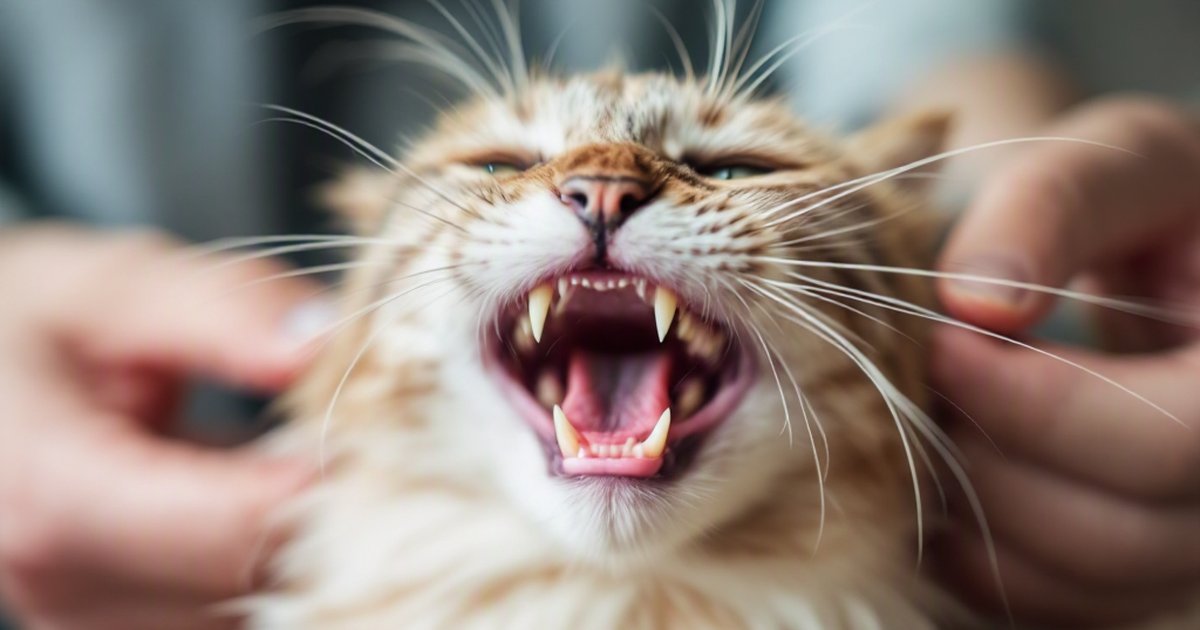
Gingivostomatitis (say it: jin-jih-vo-sto-mah-TY-tis) is a severe, chronic inflammation of the gums and the soft tissue lining the mouth. Think of it like a deep, persistent irritation that won’t calm down on its own, no matter what medications are tried. The tissue becomes bright red, swollen, and extremely painful.
Cats with this condition often stop eating, drool, paw at their mouths, and lose weight because eating hurts too much. It significantly lowers their quality of life.
The “caudal” part of the name refers to the tissue at the very back of the mouth, near the throat — which is the most common area affected. “Unilateral” means only one side of the mouth is involved, rather than both.
Vets believe the condition happens when a cat’s immune system overreacts to the bacteria on the teeth’s surfaces. The immune response, instead of clearing the problem, turns against the cat’s own mouth tissue. The most reliable cure has been removing all the teeth — eliminating the trigger entirely — which resolves the inflammation in most cases.
Why This Research Was Needed
Full-mouth tooth removal is a major surgery. It requires general anesthesia, a skilled veterinary dentist, and a significant recovery period. The idea of removing every tooth in a cat’s mouth can feel alarming to pet owners, even when it’s the most effective option.
Researchers noticed that some cats only have inflammation on one side of the mouth. They wondered: if the inflammation is truly limited to one side, could removing just the teeth on that side — instead of all of them — be enough to resolve it? Before this case series, there was little published evidence to answer that question.
How the Study Was Done
Researchers looked back through records at three cats who had been diagnosed with one-sided caudal FCGS and treated with a partial-mouth extraction — removing only the teeth on the inflamed side.
Here’s what the study involved:
- 3 client-owned cats with confirmed unilateral (one-sided) caudal FCGS
- Each cat was treated with partial-mouth extraction — teeth removed only on the affected side
- Cats were followed after surgery to track whether the inflammation resolved
- The outcome measured was complete clinical remission — meaning the inflammation fully cleared and the cat showed no more signs of pain or disease
The researchers reviewed this data looking backward through existing patient records, which is called a retrospective study design.
What the Findings Showed
The results were encouraging. All three cats reached complete clinical remission after their partial-mouth extraction. The inflammation cleared up entirely on the treated side.
Equally important: none of the cats needed long-term immunomodulatory treatment during the follow-up period. Immunomodulatory drugs are medications that dial the immune system up or down — in other words, none of the cats required ongoing medication to keep the inflammation under control. Their mouths stayed healthy after surgery alone.
This suggests that in carefully selected cases where only one side is truly affected, a more targeted surgical approach may be effective.
What This Means for Cat Owners
If your cat has been diagnosed with gingivostomatitis or is showing signs of severe mouth pain, this study offers a small but hopeful data point. It hints that treatment decisions for FCGS may not always be one-size-fits-all.
Practical Takeaways for Pet Owners
- Signs of mouth pain in cats include not eating, drooling, pawing at the face, weight loss, bad breath, and reluctance to be touched near the mouth. If you notice these, see your vet promptly.
- FCGS is a serious condition that requires professional veterinary diagnosis and treatment — do not wait it out at home.
- Full-mouth extraction is still the gold standard for most cats with FCGS and has a strong track record. This study does not change that recommendation broadly.
- Ask your vet about the extent of involvement. If your cat’s inflammation is clearly limited to one side, it may be worth asking whether a specialist evaluation could explore whether a more limited surgery is appropriate.
- Veterinary dental specialists (board-certified veterinary dentists) are the right professionals to evaluate complex FCGS cases and discuss surgical options.
When to Consult Your Veterinarian
Talk to your vet if:
- Your cat is showing signs of mouth pain or has stopped eating
- Your cat has already been diagnosed with FCGS and you want to understand all available treatment options
- You are considering a second opinion from a veterinary dental specialist before proceeding with full-mouth extraction
- Your cat has had dental surgery and you want to know what signs of healing — or setback — to watch for at home
Important Limitations to Understand
This study is very small and preliminary. Three cats is an extremely limited number of cases, and the findings cannot be generalized to all cats with FCGS. Because the researchers looked back through existing records (rather than setting up a controlled trial), there is more room for variation in how cases were selected and followed.
The cats in this study all had truly one-sided disease — a specific subset of FCGS cases. Most cats with FCGS have inflammation on both sides, or more widespread involvement, and would not fit this profile. Future research with larger numbers of cats and rigorous follow-up will be needed before this approach could become a standard recommendation.
Bottom Line
This small case series of three cats is an early but intriguing finding: cats whose gingivostomatitis only affects one side of the mouth may be able to achieve full remission with partial — rather than full — mouth extraction. All three cats in the study healed completely and did not need long-term medication afterward.
That is genuinely good news to watch. But it is important to keep the size of this study in perspective — three cats is too few to draw broad conclusions. If your cat is dealing with severe mouth inflammation, the most important step is getting a thorough evaluation from a veterinarian, and possibly a veterinary dental specialist, to determine what treatment approach fits your cat’s specific situation.
This article summarizes peer-reviewed research for educational purposes. Always consult with your veterinarian for personalized advice about your pet’s health and behavior.