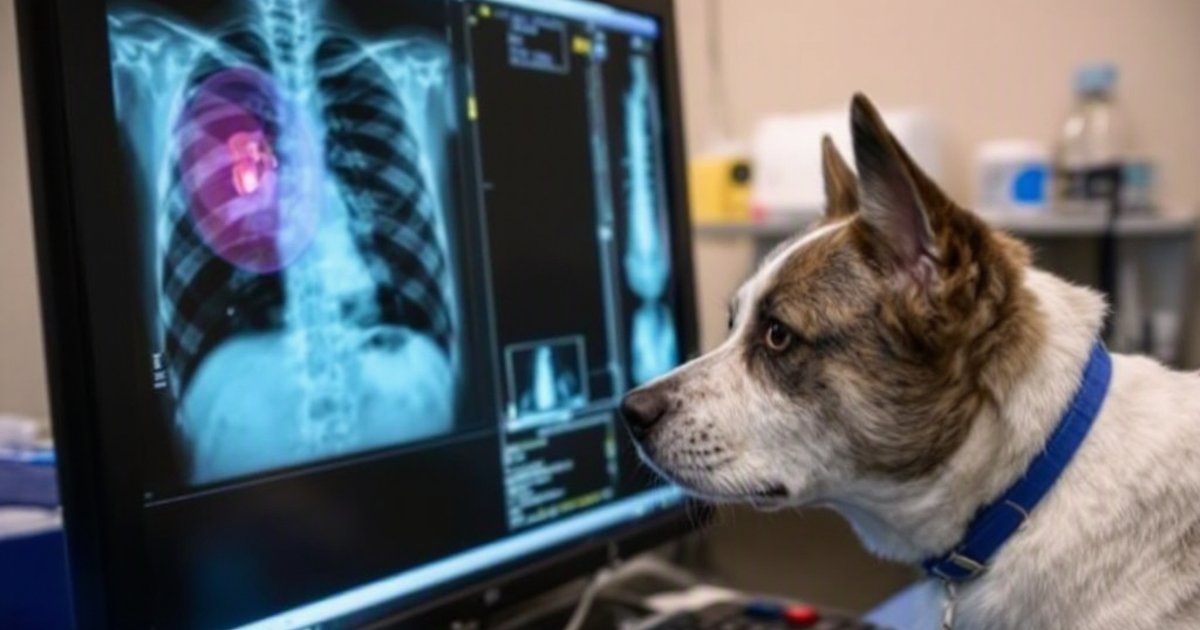
Chest X-Rays Deliver Better Answers When Your Pet Can’t Breathe
When your dog or cat is struggling to breathe, every second matters — and so does getting the right diagnosis fast. A new study of 144 dogs and cats found that chest X-rays are more accurate than ultrasound for diagnosing respiratory distress (trouble breathing). While ultrasound can give vets a quick look at the bedside, X-rays deliver a more reliable picture of what’s actually going on inside your pet’s chest.
If your pet ever ends up in the emergency vet with breathing problems, knowing what to expect — and why the vet might reach for the X-ray machine — can make a stressful moment a little less frightening.
Why Diagnosing Breathing Problems in Pets Is So Tricky
Pets can’t tell you when their chest feels tight or when it hurts to breathe. By the time you notice your pet is panting too hard, breathing with their neck stretched out, or struggling to get air, something serious may already be happening inside their lungs or chest.
There are many things that can cause breathing difficulties in pets — fluid around the lungs, a collapsed lung, heart enlargement, pneumonia (a lung infection), and more. Each of these looks different on a scan, and choosing the wrong treatment for the wrong problem can be dangerous. That’s why getting an accurate picture of the chest quickly is so important in an emergency.
For years, vets have had two main tools for this: chest X-rays and ultrasound. X-rays are like taking a photograph of the inside of the chest. Ultrasound uses sound waves — similar to sonar — to create a moving image. Both have real advantages, and until now it wasn’t totally clear which one vets should reach for first in a breathing emergency.
How the Study Was Done
Researchers conducted a comparative diagnostic study — meaning they directly tested both tools on the same patients to see which one gave better results. Here’s a quick breakdown:
- Patients: 144 dogs and cats brought to a veterinary emergency clinic with breathing problems. All patients were non-traumatized, meaning their breathing issues were not caused by an accident or physical injury.
- What was compared: Chest X-rays (also called thoracic radiography — “thoracic” just means relating to the chest) versus lung ultrasound.
- What was measured: How accurate each tool was at identifying the correct cause of the breathing problem, and how quickly each tool could give useful information.
Think of it like comparing two different GPS apps: one might load faster, but the other might give you more accurate directions.
What the Study Found
X-Rays Win on Accuracy
The study’s main finding was clear: chest X-rays were more accurate than ultrasound for figuring out what was causing a pet’s breathing trouble. When vets needed to know exactly what was wrong inside the chest, the X-ray gave a more reliable answer.
This matters a lot. An accurate diagnosis means the right treatment. A misdiagnosis in a breathing emergency — even a small one — can lead to the wrong medication or procedure at the worst possible moment.
Ultrasound Has Its Own Strength
Ultrasound wasn’t left without a role. The study found that ultrasound was faster for a quick bedside assessment — meaning it can help a vet get an initial read on a pet’s condition right away, without moving the animal to an X-ray room.
For a pet that is critically ill, even a short trip across the clinic can be stressful and risky. Ultrasound’s speed and portability make it a useful first step: the vet can quickly check whether there’s obvious fluid around the lungs or other urgent signs, then follow up with an X-ray for a full, accurate diagnosis.
So rather than replacing each other, the two tools can work as a team — ultrasound for the fast first look, X-ray for the definitive answer.
What This Means for You as a Pet Owner
Understanding the Tools Your Vet Uses
If your pet arrives at an emergency clinic struggling to breathe, you might see the vet team move quickly between different machines. Now you know why:
- A quick ultrasound scan at the bedside can give the team an immediate clue about what’s happening.
- A chest X-ray gives the most accurate diagnosis and guides the treatment plan.
Both steps serve your pet’s best interests. Don’t be alarmed if the vet uses one, the other, or both — they’re following the evidence.
When to Seek Emergency Help
Breathing problems in pets are always an emergency. Go straight to a veterinary clinic if you notice any of these signs:
- Breathing that’s faster or harder than normal
- Your pet stretching their neck out to breathe
- Gums or tongue that look blue, gray, or pale
- Your pet refusing to lie down and sitting with elbows out (a sign of respiratory effort in dogs)
- Open-mouth breathing in cats (cats almost never breathe with their mouth open unless something is seriously wrong)
When to Consult Your Veterinarian
Even outside of an obvious emergency, talk to your vet if your pet seems more tired than usual, coughs frequently, or breathes noisily during rest. Some lung and heart conditions develop slowly. Catching them early gives your vet more treatment options — and your pet a better outcome.
Limitations of This Study
This research focused specifically on pets whose breathing problems were not caused by trauma — things like car accidents or falls. That means the results may not apply to every type of breathing emergency. Traumatic chest injuries (like a broken rib that punctures a lung) might behave differently under imaging.
The study also didn’t break down results by specific breed, age, or cause of distress. Future research could help clarify which tool works best for particular conditions or patient types, and how the two tools can be most effectively combined in real emergency workflows.
Bottom Line
This study adds important evidence to a practical question vets face every day: which imaging tool gives the best answer fastest when a pet is struggling to breathe? The answer, based on 144 dogs and cats, is that chest X-rays are the most accurate way to diagnose the cause of respiratory distress, while ultrasound earns its place as a fast bedside screening tool.
For pet owners, the takeaway is simple: if your dog or cat is having trouble breathing, get to an emergency vet immediately. The tools your vet uses — whether ultrasound, X-ray, or both — are backed by growing evidence. Trust your care team, know the warning signs, and don’t wait to seek help. In a breathing emergency, time is everything.
This article summarizes peer-reviewed research for educational purposes. Always consult with your veterinarian for personalized advice about your pet’s health and behavior.