The technique, in one paragraph
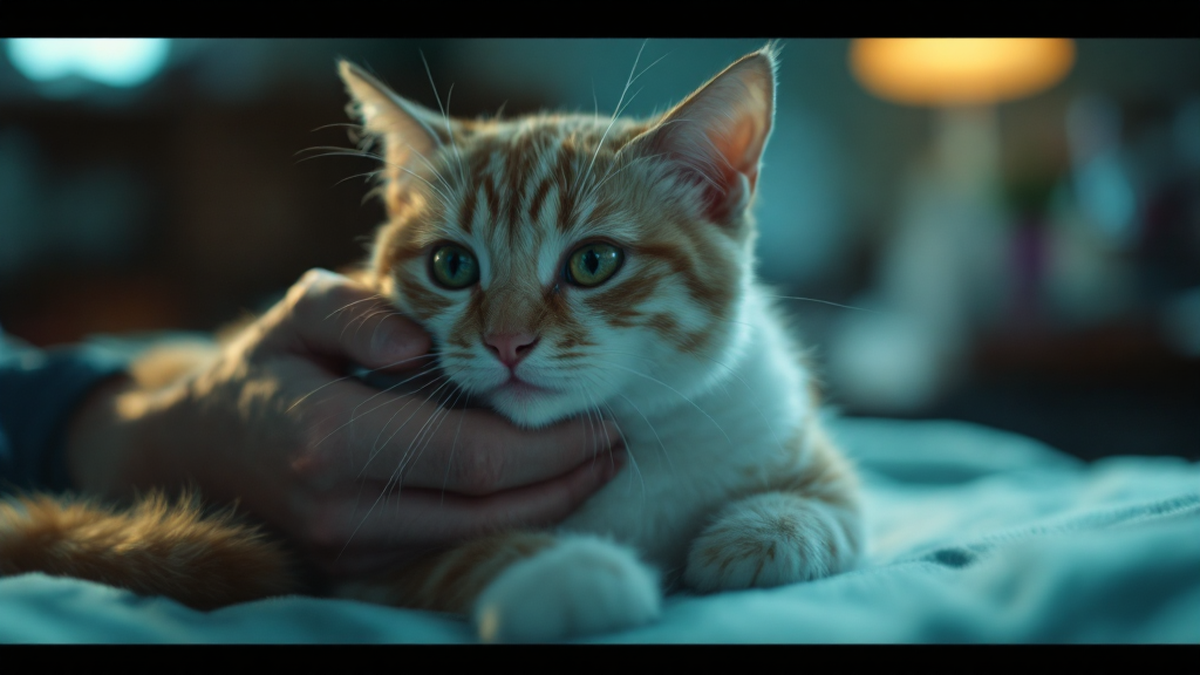
A purring cat cannot be examined properly, because the purr is louder than the heart sounds underneath it. Researchers at Utrecht University tested a simple fix. The vet gently cups the cat’s larynx — the voice box, the firm little tube at the front of the throat — from underneath, using one hand, while holding the stethoscope with the other hand. The purr usually stops within seconds. The cat keeps breathing normally and, in most cases, barely reacts.
That is the whole method. It worked on 89% of the purring cats in the study.
Why a purr is a real medical problem
A purr measures louder than the sounds a vet is listening for. Heart murmurs, irregular rhythms, and abnormal lung sounds all sit underneath it. When a cat purrs through an exam, the vet is effectively listening to static.
This is not rare. The researchers watched 582 cats during routine physical exams across two clinics. 51 of them — 8.8%, or roughly one cat in eleven — purred during the examination.
There is a detail here that matters more than the headline number. The cats that purred were more likely to be the sick ones and the older ones. Purring is not only a happy sound; cats also purr when they are stressed or unwell. So the purr is most likely to appear in exactly the cats whose hearts most need listening to.
What the researchers found
The technique stopped the purring in 89% of the cats it was used on.
The more interesting result is who was able to do it. The study compared two people: a veterinary student and an experienced veterinary cardiologist. There was no meaningful difference between them (p = 0.57 — a statistical way of saying the small gap between the two is well within chance).
That matters because it tells you the method depends on the technique, not on the practitioner’s experience. It is a learnable trick, not a specialist skill.
The researchers also compared a busy teaching hospital with a calm, cat-friendly private practice. The rate of purring was the same in both (p = 1.00). A quieter clinic did not produce fewer purring cats.
What this means for your cat’s check-up
If your vet pauses, frowns, and moves the stethoscope around while your cat rumbles away, they are struggling to hear the heart. The traditional workarounds are running a tap, or blowing on the cat’s face. These are unreliable, and they can startle a cat that was previously relaxed.
The larynx hold is a better option, and it is reasonable to ask about it:
“She’s purring — would a larynx hold help you hear her heart?”
Most vets will know the technique or will pick it up quickly. It takes seconds, and it does not require restraining or upsetting the cat.
Should you try this at home?
We would not recommend it. This is the honest answer, and it is a point where this article deliberately differs from a straightforward reading of the study.
The technique was tested by veterinary professionals, in clinics, on cats being examined — a veterinary student and a cardiologist. It was not tested on owners at home. The throat is a sensitive area containing the windpipe, and the study does not tell us what happens when an untrained person applies pressure in the wrong place or with the wrong force.
There is also little reason to do it. The purpose of stopping the purr is to hear a heart murmur through a stethoscope, and detecting a murmur is a trained skill. Silencing your cat’s purr at home does not give you that ability.
Understanding the technique is genuinely useful. Performing it yourself is not the point.
When your cat’s heart should be checked
- At every annual check-up. Ask specifically whether the heart was heard clearly, not just whether it sounded fine.
- More often from middle age onward. Older cats in this study purred more, which makes clear listening harder exactly when it matters more.
- Whenever your cat seems unwell. Sick cats purred more often. If your cat is being examined because something is wrong, the purr is more likely to get in the way.
- If a murmur has already been found. Follow the monitoring schedule your vet sets.
Signs that always deserve a prompt call: fast or laboured breathing at rest, open-mouthed breathing, sudden weakness or dragging of the back legs, or fainting. These are urgent and are not something to monitor at home.
What the study does not tell us
Read the 89% figure carefully. It describes the 51 cats that were purring, not all 582. It is a strong result on a small group.
Other limits worth knowing:
- This was an observational study, not a randomised trial. The larynx hold was not directly compared against running water or blowing on the face under controlled conditions. The claim that it is better than those methods is the authors’ reasoned view, not a measured head-to-head result.
- Two investigators, at two clinics, in one country. Whether the results hold across many practitioners is untested.
- The study reports that most cats tolerated the technique well, but it was not designed as a safety trial and did not measure stress hormones or behaviour scores.
- Roughly one purring cat in nine did not stop purring. The method is not universal.
- Cats with severe anxiety, and cats that are aggressive when handled, were not the focus of this work.
Bottom line
Purring hides heart disease, and it turns up most in the cats most likely to have it — the older and the unwell. A gentle hand cupped under the larynx stopped the purr in 89% of cases, and a student performed as well as a specialist. It is a small technique that makes a real difference to what your vet can hear. Ask for it by name at your cat’s next check-up.
Disclaimer
This article explains published research and is not veterinary advice. It describes a technique used by veterinary professionals during examinations; it is not a guide for use at home. Always consult your veterinarian about your cat’s health and before trying any new handling method.