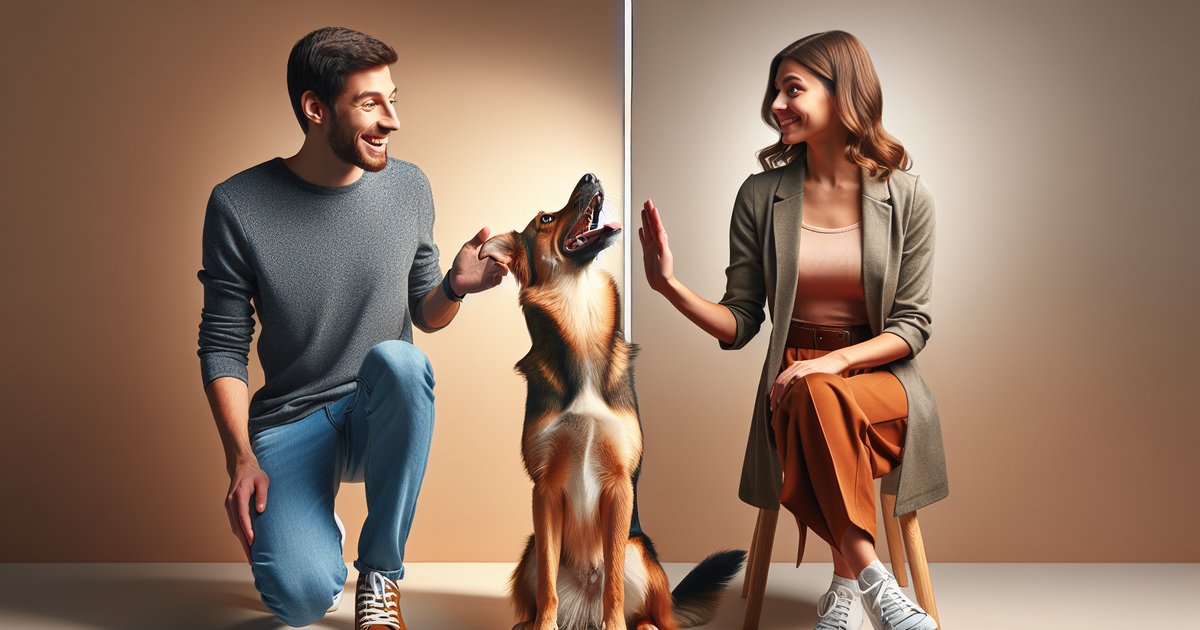
Ever wonder if your dog can really tell when you’re having a bad day? A fascinating new study provides clear scientific evidence that dogs are remarkably attuned to human emotions—and they respond dramatically differently depending on whether you’re happy, neutral, or upset.
Researchers studying 70 pet dogs found that our canine companions not only distinguish between different human emotional expressions but also adjust their behavior accordingly. Happy faces triggered more tail wagging, exploration, and contact-seeking, while negative emotions led to increased avoidance and vigilance.
This groundbreaking research offers valuable insights for dog owners, trainers, and anyone seeking to strengthen their bond with their four-legged family members.
Research Background
The human-dog relationship represents one of the most unique interspecies bonds in the animal kingdom. After thousands of years of co-evolution, dogs have developed an extraordinary ability to read human social cues that even our closest primate relatives struggle to interpret.
Previous studies suggested dogs could respond to human emotions, but this research represents one of the most controlled investigations into exactly how dogs process and react to different emotional states. The findings have profound implications for training methods, behavioral therapy, and our understanding of canine cognition.
The study used standardized emotional displays to eliminate variables like tone of voice, body language differences, or individual variation—allowing researchers to isolate the pure effect of emotional expression on canine behavior.
Study Details
Research Design: Controlled behavioral experiment using standardized emotional stimuli
Participants: 70 pet dogs of various breeds and ages
- All dogs were tested in controlled laboratory conditions
- Each dog was exposed to multiple emotional scenarios
- Behaviors were systematically recorded and analyzed
Testing Methods:
- Standardized actor performances displaying distinct emotional states
- Video presentations ensuring consistent emotional cues
- Careful measurement of approach/avoidance behaviors
- Analysis of tail position, contact initiation, and exploration patterns
Emotional Categories Tested:
- Positive: Happy, welcoming expressions and body language
- Neutral: Calm, emotionally neutral presentations
- Negative: Upset, frustrated, or angry expressions
Measured Behaviors:
- Approach and avoidance patterns
- Tail carriage height and movement
- Initiation of physical contact
- Exploratory behavior intensity
- Signs of vigilance or anxiety
Key Findings
Dogs Clearly Distinguish Human Emotions
The most striking finding was dogs’ ability to differentiate between emotional states:
- Clear behavioral separation across all three emotional categories
- Consistent responses regardless of individual dog characteristics
- Immediate recognition of emotional cues without extended exposure
This suggests dogs have evolved sophisticated mechanisms for reading human emotional states, likely as an adaptive advantage during domestication.
Happy Emotions Trigger Positive Engagement
When exposed to positive human emotions, dogs showed dramatically different behaviors:
- Increased approach behavior - Dogs moved closer to happy humans
- High tail carriage - A classic sign of positive emotional state in dogs
- Contact-seeking - Dogs initiated more physical interaction
- Enhanced exploration - Increased willingness to investigate their environment
These responses indicate that positive human emotions create a sense of safety and encouragement in dogs, making them more confident and socially engaged.
Negative Emotions Cause Avoidance and Vigilance
Conversely, when humans displayed negative emotions, dogs exhibited:
- Avoidance behaviors - Physical distancing from the source
- Increased vigilance - Heightened alertness and caution
- Reduced exploration - Less willingness to investigate surroundings
- Stress indicators - Signs of anxiety and uncertainty
This demonstrates that dogs are not just passive observers but actively respond to human emotional states in ways that suggest they’re emotionally affected by what they perceive.
Training and Behavior Implications
The research reveals why certain training approaches are more effective:
- Positive reinforcement works better when paired with genuinely positive emotions
- Frustrated training sessions may actually impede learning through increased dog anxiety
- Consistent emotional tone during training helps dogs focus and engage
- Owner emotional state directly impacts training outcomes
Implications for Dog Owners
What This Means for Daily Life
Understanding your dog’s emotional sensitivity can transform your relationship:
During Training Sessions: Maintain a positive, upbeat demeanor to encourage engagement and learning. Mental stimulation toys can help create positive training experiences when used with encouraging emotional cues.
When Stressed: Be mindful that your emotional state affects your dog’s comfort level. If you’re having a difficult day, your dog may benefit from extra reassurance and calm interactions.
Building Confidence: Use positive emotions strategically to help anxious or fearful dogs build confidence in new situations.
Practical Training Applications
Effective Training Strategies:
- Begin training sessions when you’re in a positive mood
- Use enthusiastic praise and genuinely happy expressions during success
- Avoid training when frustrated or stressed
- Puzzle toys for positive engagement can help create enjoyable learning experiences
Behavioral Modification:
- Use calm, positive energy when working with fearful dogs
- Maintain consistent emotional tone during behavior correction
- Reward desired behaviors with genuine enthusiasm
- Provide enrichment activities to maintain positive mental stimulation
When to Consult Professionals
Seek Help If:
- Your dog shows extreme sensitivity to emotional changes
- Training efforts consistently fail despite positive approaches
- Your dog exhibits anxiety or stress regardless of your emotional state
- Behavioral issues persist despite environmental improvements
Professional Support Options:
- Certified dog trainers specializing in positive reinforcement
- Veterinary behaviorists for complex emotional issues
- Training classes that emphasize positive emotional environments
Study Limitations
While this research provides valuable insights, several limitations should be considered:
- Laboratory setting may not fully replicate real-world interactions
- Standardized actors may not capture the full range of human emotional expression
- Individual dog differences weren’t fully explored in breed or personality variations
- Long-term effects of repeated emotional exposure weren’t measured
The researchers acknowledge that home environments with familiar humans might produce different results than controlled laboratory conditions.
Bottom Line
This study provides compelling scientific evidence for what many dog owners have long suspected: our dogs are incredibly attuned to our emotional states and respond accordingly. The research shows that maintaining positive emotional energy during interactions with your dog isn’t just feel-good advice—it’s scientifically proven to improve engagement, learning, and overall wellbeing.
For dog owners, the message is clear: your emotional state matters. When you approach training, play, or daily interactions with genuine positivity and calm energy, you’re creating an environment where your dog feels safe, confident, and eager to engage.
The study also validates positive reinforcement training methods by showing that dogs naturally gravitate toward positive emotional experiences while avoiding negative ones. This suggests that enrichment tools that encourage natural behaviors combined with positive emotional energy create the ideal learning environment.
Understanding your dog’s emotional sensitivity can help you become a better trainer, a more effective communicator, and ultimately, a stronger partner in your human-canine relationship.